


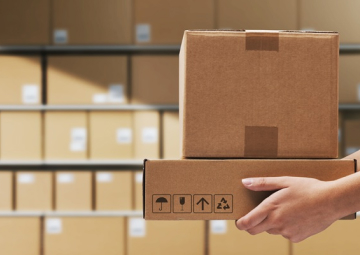
Produce packaging requirements vary across packing, storage, transportation, and retail handling. For field and warehouse handling, review load capacity, stacking, and storage conditions. At the store, the packed unit has to suit the retailer’s display and handling process. Compare each format against the intended load, handling process, and retail requirements. An unsuitable format may create additional handling, repacking, or pallet space requirements.
What Is the Main Difference Between a Bulk Produce Box and a Cardboard Produce Basket?
A bulk produce box carries larger quantities through storage and transport. A produce basket holds a smaller unit that is often sold or displayed as packed.
Can a Bulk Produce Box Work as Shelf Ready Packaging?
It can, when the box is designed with display features such as an open front, a removable panel, or a printed exterior.
This comparison looks at load capacity, handling, presentation, and transport efficiency, so growers can match each format to the right stage of their supply chain. It applies the same principle behind right sized packaging for Canadian businesses: packaging should fit the product and the way it moves.
Bulk produce boxes are larger corrugated containers used by farmers, wholesalers, and retailers to store and transport produce in volume. They are available in a range of sizes, and vented designs support airflow.
Cardboard produce baskets are smaller, open containers that hold a set quantity. Farms, grocery stores, and farmers’ markets use them to transport and display produce. Confirm whether the baskets require an outer case or tray for the proposed storage and shipping arrangement.
| Factor | What to confirm |
|---|---|
| Main role | Bulk produce boxes: storage and transport in volume. Cardboard produce baskets: smaller packed units for transport and display. |
| Load per container | Confirm the specified load capacity for the proposed design. |
| Stacking | Confirm stacking suitability, pallet support, and any outer case requirements. |
| Point of sale | Confirm suitability for the retailer’s display and handling requirements. |
| Handling | Depends on container dimensions, packed quantity, and the handling process. |
Review the complete box design, pallet support, and stacking arrangement with the supplier. Board grade, flute, wall construction, and box dimensions all shape how much weight a box holds and how high it stacks. Heavier loads may call for heavy duty construction. Ask the supplier to confirm suitable construction for the proposed load.
Confirm the basket’s load capacity and whether an outer case or tray is required for stacking. Cold storage and moisture from fresh produce can also affect corrugated board, so the specification should reflect actual storage conditions.
Verdict: Confirm load capacity and stacking requirements for the proposed packaging arrangement.
Compare filling, closure, labelling, and movement requirements for the planned shipment. With bulk boxes, the trade off can come later, when produce sold in smaller quantities must be sorted or repacked.
Compare container quantities and filling steps for the proposed packing arrangement. Confirm whether the retailer accepts the packed unit without additional sorting or repacking.
Verdict: Compare packing and repacking labour across the proposed distribution process.
Confirm how the outer case or tray supports retail handling of packed units. Custom printing can add branding to the basket itself.
Confirm whether the proposed bulk box is intended for storage, transportation, retail display, or a combination of uses. Ask the supplier to confirm whether the box design meets the retailer’s shelf ready packaging requirements. A corrugated display tray can also bridge both formats, holding baskets or packed units on the shelf. The goal of shelf ready packaging is simple: move product from pallet to shelf with minimal handling. Coleman Containers also designs POP display solutions for retail settings.
Verdict: Compare display suitability against the retailer’s requirements. A bulk box needs deliberate design to perform as shelf ready packaging.
Compare the specified packed quantity and external dimensions of each proposed container. Review external dimensions, pallet layout, and stacking limits when assessing space use.
Check the proposed packing arrangement for unused space and movement within the outer case. Check case dimensions against the pallet layout and assess whether the baskets need additional restraint. Review recurring fit or movement problems before scheduling further shipments.
Review available packaging storage against the harvest schedule. Inventory management and just in time delivery can help align packaging supply with harvest schedules.
Where baskets are packed into a fitted outer case or display tray, ask the supplier to assess the combined basket and outer case arrangement against transport and retail requirements.
Coleman Containers designs and manufactures custom corrugated packaging in house, including bulk produce boxes and cardboard produce baskets, with custom sizing and branding available. Contact Coleman Containers to review which format fits current produce lines and distribution channels.
It is packaging designed to go from delivery to shelf with minimal handling. It typically combines a stable shipping structure with display openings and printed panels.
A corrugated display tray holds baskets or packed units on the shelf. Confirm whether the proposed tray is suitable for transportation, retail display, or both.
Yes. Coleman Containers offers custom designs for both formats, including branding, logos, and colours.
There is no fixed answer. Total cost depends on container price, packing labour, repacking steps, pallet efficiency, and damage in transit.
Yes. Coleman Containers supplies both bulk produce boxes and cardboard produce baskets. Ask Coleman Containers to confirm compatible dimensions, outer case requirements, and delivery arrangements.
Get Free Estimate!