

Importance of Right-Sized Packaging
As businesses look for better control over packaging costs, product protection, and shipping efficiency, selecting packaging involves more than comparing box dimensions or material prices. This guide explains how right-sized packaging supports more efficient operations and the factors that influence material use, freight requirements, product movement, and damage risk.
We cover how custom packaging supports consumer goods, food and beverage, medical equipment, pharmaceuticals and nutraceuticals, and automotive parts. The guide also explains what businesses should evaluate when reviewing product dimensions, protection requirements, packaging materials, transportation conditions, inventory planning, and potential packaging partners.
The key takeaway: Right-sized packaging involves more than choosing a smaller box. Aligning the packaging structure, materials, internal support, and inventory program with the product can help businesses control unnecessary costs, limit material waste, improve product protection, and support more efficient packaging operations.
Packaging should do more than contain a product. It should support product protection, packing efficiency, storage, transportation, and inventory planning. When a box is larger than necessary or lacks the right internal support, it can create avoidable costs throughout the supply chain.
This is why right-sized packaging deserves closer attention. The goal is not simply to use a smaller box. It is to create a packaging structure that reflects the product’s dimensions, weight, fragility, handling conditions, and shipping requirements.
For manufacturers, distributors, and retailers, the right packaging specification can support several operational priorities. These include controlling material use, limiting unnecessary void space, reducing product movement, and making packed goods easier to store and handle.
Coleman Containers designs and manufactures custom packaging for businesses across Canada. Its capabilities include corrugated packaging, foam packaging, fibre products, honeycomb structures, edge protection, and heavy-duty bulk packaging. These options allow the packaging structure to be developed around the product, rather than forcing the product into the closest available stock box.
This guide explains what right-sized packaging means, where packaging mismatches create costs, how the redesign process works, and what businesses should evaluate when selecting a packaging company.
What Is Right-Sized Packaging?
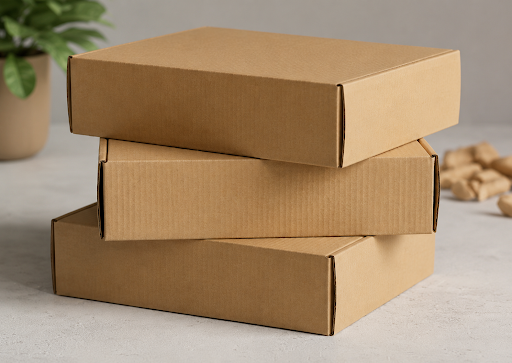
Right-sized packaging is designed around the size and protection needs of a specific product or product group. It considers the outer container, internal support, material strength, packing process, storage conditions, and transportation environment.
A right-sized packaging solution may include:
- A custom corrugated box that closely matches the product dimensions
- A foam insert that limits movement around a sensitive component
- A fibre or corrugated divider that separates multiple items
- A honeycomb structure that supports a heavier product
- Edge protection that reinforces a palletized load
- A triple wall bulk pack for large or heavy products
The smallest possible package is not always the right solution. Reducing the box dimensions without considering cushioning, wall strength, or handling conditions can leave the product underprotected. The objective is to remove unnecessary material and space while maintaining suitable protection.
This distinction is important. Right sizing is a packaging design decision, not a box reduction exercise.
Why Existing Packaging Specifications Need Regular Review
Packaging requirements can change even when the product remains the same. Shipping routes may change. Order quantities may increase. New product variations may enter the line. Warehouse space may become limited. A business may also begin shipping individual parcels instead of full pallet loads.
An older packaging specification may no longer support these conditions. Teams may compensate by adding more loose fill, applying additional tape, repacking damaged cartons, or keeping several oversized boxes available for different products.
These workarounds can become part of the normal packing process. That can make the underlying packaging problem less visible.
A packaging review can help identify whether the current design still supports the product and the way it moves through the supply chain. Warning signs can include:
- Noticeable product movement inside the package
- Frequent use of loose fill to close large internal gaps
- Crushed corners, scuffed surfaces, or damaged components
- Extra packing steps added by warehouse staff
- Several box sizes used for very similar products
- Packed cartons that use more storage space than expected
- Packaging that does not stack securely during storage or transportation
Ignoring these signs can allow material handling and damage-related costs to continue across every order.
The Three Costs of Poorly Matched Packaging
Oversized and underprotective packaging create different problems. However, both can affect three important areas of packaging performance.
Freight and Shipping Costs
Parcel shipping charges may reflect both shipment weight and package dimensions. The exact method depends on the carrier agreement and service used. A box with unnecessary empty space may therefore use more transportation capacity than the product requires.
The effect can be difficult to spot because it is distributed across individual shipments. Reviewing high-volume products can help a business identify where package dimensions are not aligned with product dimensions.
Right-sized packaging can address this mismatch by reducing avoidable outer volume. The final design must still provide enough space for inserts, cushioning, closures, and safe handling.
Freight considerations also apply beyond parcel delivery. Better proportioned packages may support more efficient pallet layouts, staging, and warehouse storage. The suitable design depends on how the product moves, not only where it ends its journey.
Material and Packing Costs
An oversized box uses more corrugated material than a smaller structure with the same board specification. It may also require paper, foam, or another form of void fill to control product movement.
Loose fill can create additional work at the packing station. Staff must add it, position it, and check that the product is supported before closing the box. The business must also purchase, store, and replenish that material.
A custom insert or built-in corrugated feature may provide a more consistent fit. Tabs, folds, partitions, and fitted cushioning can support the product without relying on large amounts of loose material.
This does not mean that every redesign should remove void fill. Some products still need cushioning or separation. The design should use the materials required for protection without adding material that serves no clear purpose.
Businesses reviewing this area can also consider how eco-friendly packaging materials align with product protection, handling, and disposal requirements.
Damage and Return Costs
Empty space can allow a product to move inside a package. This movement may expose the product to repeated contact with the box walls or other packed components. A box that lacks suitable board strength or internal support can create a different risk.
The cost of damage may extend beyond the affected item. It can involve inspection, repacking, replacement, return transportation, claim handling, and customer communication. Repeated damage can also signal that the packaging specification does not reflect actual handling conditions.
Review these five signs that packaging savings may be increasing shipment damage costs to identify problems that warrant closer attention.
Right-sizing addresses this issue by considering both fit and protection. A fragile product may require foam cushioning. A heavy component may need a reinforced corrugated structure. An irregular part may require a custom insert that supports specific contact points.
The design should also reflect how the package will be stacked, moved, stored, and opened. These factors help determine whether the product needs cushioning, reinforcement, separation, or a combination of materials.
How a Right-Sized Packaging Redesign Works
Effective packaging starts with the product and the operating conditions around it. Selecting a box before reviewing those conditions can lead to a design that solves only part of the problem.
Review the Product
The design team needs accurate product dimensions and weight. It should also understand fragile areas, surface sensitivity, protruding components, and any parts that must remain separated.
Where several related products are involved, the review should consider the entire product group. A small set of custom sizes may be more practical than a different package for every variation. The right approach depends on order volume, shared dimensions, and inventory requirements.
Compare fit-to-product packaging vs. standard box sizes to assess freight costs, protection, material use, and inventory requirements.
Review the Current Packaging
Existing packaging can show where the redesign should focus. Useful questions include:
- Where does empty space appear?
- How much loose fill is added?
- Does the product shift after the box is closed?
- Which areas show crushing, tearing, or abrasion?
- How many packing steps are required?
- Does the packed carton stack and store securely?
- Are staff modifying the packaging during fulfillment?
These observations provide practical context that product measurements alone cannot supply.
Understand Storage and Transportation Conditions
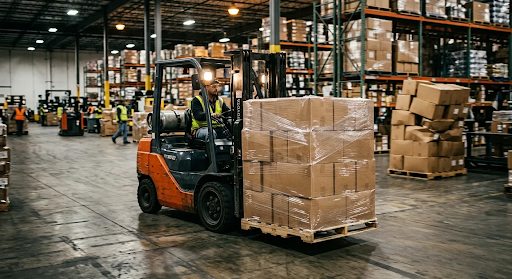
A package moving as an individual parcel may face different handling conditions from a product secured within a pallet load. Products shipped between facilities may also have different requirements from products delivered to a retail location.
The design should account for the expected shipping method, stacking arrangement, handling equipment, storage period, and loading process. A packaging company should ask about these conditions before recommending a structure.
Select the Packaging Materials
Material selection should follow the product review. Corrugated, foam, fibre, honeycomb, chipboard, and edge protection each perform different roles.
Custom corrugated packaging can provide the outer structure, partitions, trays, and fitted supports. Foam packaging can cushion sensitive or high-value items. Honeycomb structures can provide support where load distribution and rigidity matter. Edge protection can reinforce corners and improve pallet stability.
Some applications require more than one material. A corrugated outer container may work with a fitted foam or fibre insert. The material combination should be based on the product and its handling requirements.
Develop and Review the Design
An initial design should reflect the agreed product, packing, storage, and transportation requirements. A sample can then be reviewed for fit, assembly, packing steps, closure, and product support.
Feedback at this stage can identify practical issues before the packaging enters regular use. For example, an insert may protect the product but take too long to assemble. A box may fit correctly but make product removal difficult. These details affect whether the final design works at the packing station.
Coleman Containers uses an in-house design process to develop custom packaging around specific product requirements. This capability supports closer coordination between the packaging concept and the manufactured structure.
Plan the Packaging Transition
A redesign also needs an inventory plan. Existing packaging stock may need to be used before introducing the new specification. The business may also need to coordinate packaging availability with production schedules or seasonal demand.
Coleman Containers offers inventory management, warehousing, and just-in-time delivery support. These services can help businesses establish forecasts and inventory levels for their packaging programs. They can also support scheduled releases as packaging is required.
Right Sized Packaging Across Key Industries
The same design principle applies across industries, but the required structure changes with the product and its handling conditions.
Consumer Goods
Consumer goods may include several products with different sizes, shapes, and presentation needs. A packaging review can identify where a small group of custom sizes can serve those variations without returning to one oversized box.
The structure must protect the product while supporting an efficient packing process. Where presentation matters, custom inserts and well-proportioned outer packaging can also support the way the product is revealed and handled after opening.
Packaging can influence how a product is perceived. Businesses considering this aspect can review how packaging may make a product feel more premium and support brand recognition and customer loyalty.

Food and Beverage
For food and beverage businesses, this discussion applies to outer packaging used for storage and transportation. It does not address materials that come into direct contact with the product.
Bottles, cans, jars, and packaged goods may require corrugated cases, partitions, trays, or heavy-duty structures. The design should reflect container weight, product count, stacking needs, and movement through the supply chain.
A closer fit can limit movement between containers. Suitable partitions can keep items separated, while an appropriate corrugated specification can support handling and stacking requirements.
Medical Equipment
Medical devices and equipment can include sensitive components, delicate surfaces, and irregular shapes. A custom insert can support the product at selected points and limit movement inside the outer container.
Foam, corrugated, and fibre components may be combined according to the equipment design and transportation requirements. The packaging company should understand which areas need support and which surfaces must avoid pressure or contact.
This section concerns protective transportation packaging. The responsible business and relevant specialists must review any specialized regulatory or sterile barrier requirements separately.
Pharmaceuticals and Nutraceuticals
Pharmaceutical and nutraceutical businesses may need secondary or transportation packaging for finished products, cartons, bottles, or packed units. Right sizing can support organized packing, product separation, and efficient use of outer cartons.
The packaging structure should reflect the size, weight, quantity, and handling needs of the packed goods. It should not be assumed to provide temperature control, contamination protection, or regulatory compliance unless those requirements are specifically designed and verified.
Automotive Parts
Automotive packaging must accommodate products ranging from small components to large and heavy parts. Irregular shapes, sharp edges, sensitive finishes, and concentrated weight can make generic boxes unsuitable.
Possible solutions include custom corrugated containers, fitted inserts, edge protection, honeycomb support, and triple wall bulk packs. The selected structure should reflect the part, handling equipment, storage method, and transportation route.
Reusable handling processes, line side delivery, and interfacility movement may also affect the design. These requirements should be discussed during the initial packaging review.
How Inventory Support Strengthens a Packaging Program
A successful redesign does not end when the box is approved. Packaging must be available when production and fulfilment teams need it.
Holding too much packaging can occupy warehouse space. Holding too little can interrupt packing and shipping activity. The correct inventory level depends on usage, production schedules, storage capacity, and replenishment requirements.
Coleman Containers provides inventory management and just-in-time support. This can include establishing forecasts, maintaining agreed inventory levels, warehousing packaging, and arranging scheduled deliveries.
This service can be especially useful when a business:
- Uses several custom packaging specifications
- Has limited storage space
- Experiences changing production demand
- Needs packaging released according to a schedule
- Is replacing an older packaging design
Packaging design and inventory planning should be reviewed together. A suitable structure has limited value if it is unavailable when products are ready to move.
What to Look for in a Canadian Packaging Company
Comparing packaging companies involves more than reviewing a product catalogue. A custom packaging project requires design support, material knowledge, manufacturing capability, and supply planning.
In-House Design Capability
An in-house design team can review the product and develop a structure around its requirements. This creates a direct connection between the packaging concept and the manufacturing process.
Ask whether the supplier can review product samples, create custom structures, and adjust a design after the initial sample review.
Access to Multiple Materials
A supplier limited to one material may recommend that material even when the product needs a combined solution. Access to corrugated, foam, fibre, honeycomb, and reinforcement products allows the design to reflect the application better.
Custom Manufacturing
Confirm whether the company manufactures custom packaging or only supplies stock products. Custom manufacturing is important when the product requires specific dimensions, inserts, partitions, strength, or assembly features.
Coleman Containers designs and manufactures custom corrugated packaging in-house. It also supplies protective materials and custom solutions for a range of industrial and commercial applications.
Inventory and Delivery Support
Custom packaging must be replenished in line with operational demand. Ask whether the company offers warehousing, inventory planning, scheduled delivery, or stock release programs.
These capabilities can help connect the packaging specification with the business’s purchasing and production processes.
Clear Review of Requirements
A packaging company should ask detailed questions before recommending a solution. Product dimensions alone are not enough. The discussion should cover weight, fragility, packing steps, storage, shipping, handling, and expected usage.
Generic recommendations made without this context may leave important risks unresolved.

Review the Packaging Before the Costs Continue
Packaging problems are not always visible in a single shipment. They may appear gradually through excess material use, repeated packing steps, inefficient storage, or preventable product damage. When these issues continue across regular order volumes, the cost can extend beyond the box itself.
A right-sized packaging review brings the product, packaging materials, handling process, transportation conditions, and inventory requirements into one discussion. This creates a stronger basis for selecting a suitable structure.
Coleman Containers has designed and manufactured custom packaging since 1966. Its Etobicoke team works with businesses across Canada on corrugated, foam, fibre, honeycomb, edge protection, and bulk packaging requirements. Inventory management, warehousing, and just-in-time delivery support can also be incorporated into the packaging program. Contact Coleman Containers to discuss more about a right-sized packaging solution.
Frequently Asked Questions
Does right-sized packaging always mean using a smaller box?
No. The objective is to use an appropriate structure. Some products need space for cushioning or internal support. A smaller box that does not provide adequate protection would not be right-sized.
How can a business identify oversized packaging?
Common signs include large internal gaps, frequent use of loose fill, product movement, excessive packing steps, and cartons that occupy more storage space than expected. Carrier invoices and damage records may provide additional context.
What materials can be used in fit-to-product packaging?
Options include corrugated board, foam, fibre products, honeycomb structures, chipboard, edge protection, and heavy-duty bulk packaging. The material choice depends on the product and its operating conditions.
What information does a packaging company need for a redesign?
The packaging company may need product dimensions, weight, fragile areas, shipping methods, storage conditions, order quantities, packing steps, and examples of current packaging problems.
Can inventory planning be included in a custom packaging program?
Yes. Coleman Containers offers inventory management, warehousing, and just-in-time delivery support. The program can be planned around forecasts, agreed inventory levels, and delivery requirements.

