Summary
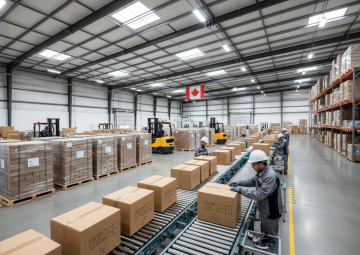
Food and beverage producers and distributors rely on outer packaging to move products through storage and transportation. Select cases, trays, partitions, and bulk packs to suit product dimensions, load requirements, and handling conditions.
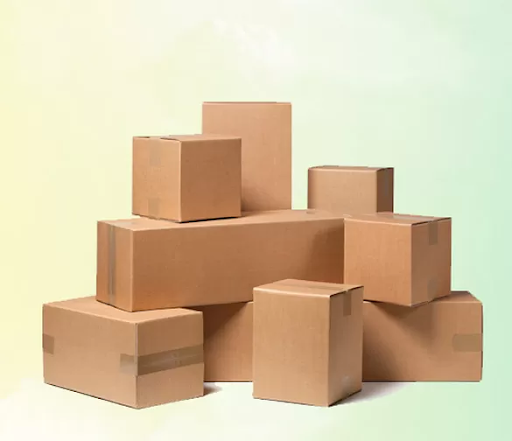
Review stock boxes against container dimensions, load weights, and storage conditions. Case requirements depend on the packed product, container format, and handling conditions. Pre assembled cartons can remove a manual step from busy packing lines.
Coleman Containers designs and manufactures custom corrugated, fibre, honeycomb, and edge board packaging in house. Discuss forecasts, agreed inventory levels, and scheduled releases with Coleman Containers when planning seasonal supply.
Outer packaging for food and beverage producers and distributors covers much more than a shipping box. It includes the cases, trays, partitions, pads, edge protection, and bulk packs that carry packaged products. These components move product from the packing line to the warehouse, the truck, and the retail floor. Coleman Containers designs and manufactures this outer packaging for storage and transportation, built around the containers, cartons, and loads each operation ships.
For food and beverage producers, packers, and distributors, outer packaging decisions affect more than appearance. A case that is slightly too large lets jars, cans, or retail containers shift. A tray that cannot hold up in cold storage or under a full pallet load can collapse. A carton that takes too long to set up slows the line during a busy harvest or a seasonal production run.
These problems rarely show up as a single large expense. They appear as crushed cases, rejected deliveries, rework at the packing station, and warehouse space filled with packaging instead of product. Recurring damage and packing problems warrant a review of the packaging specification.
This page explains what outer packaging includes beyond the box, where generic packaging falls short, and how requirements change for produce, berries, and beverages. It also covers pre assembled cartons, material choices, inventory programs, and what to look for when comparing packaging companies in Canada.
What Outer Packaging Includes Beyond the Box
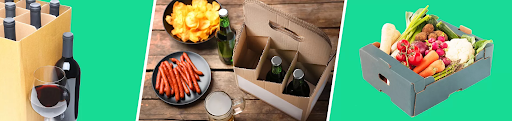
A complete outer packaging program works as a system. Review corrugated cases for food and beverage products alongside internal supports and pallet protection as part of the packaging specification.
| Component | What it does in a food and beverage supply chain |
|---|---|
| Corrugated shipping cases | Group primary packages into a unit that can be handled, stacked, and shipped |
| Partitions and dividers | Separate bottles, jars, or cartons within the case |
| Trays | Carry and organize smaller containers, often for produce, berries, or multipacks |
| Pads and cardboard sheets | Create layers between tiers and spread load across a surface |
| Edge board and corner protection | Provide edge protection where specified for the pallet load and strapping arrangement |
| Triple wall bulk packs | Hold heavier or larger volumes of processed and packaged goods |
| Pallet level packaging | Combine boxes, pallets, corner posts, and lids into a shipping unit |
| Display packaging | Point of purchase, PDQ, and countertop displays that move product from case to shelf |
Each component has a specific role. Partitions help separate glass containers. Edge board adds protection at pallet corners. Pads help spread load between layers. Treating these as separate purchases from different sources can leave gaps where one part does not fit the next.
The supply side matters as well. Outer packaging only helps if it is available when the line needs it. That is why inventory management, warehousing, and scheduled delivery belong in the same conversation as the packaging itself.
Coleman Containers manufactures custom corrugated boxes alongside fibre, honeycomb, foam, edge board, and chipboard products. That range allows the outer case, the internal supports, and the pallet protection to be designed together, rather than assembled from unrelated stock items.
Where Generic Boxes Fall Short for Food Producers
Stock boxes may suit some shipments. Review their fit against product dimensions, weight, and handling conditions.
Poor Fit and Product Movement
A stock case that is slightly larger than the containers inside leaves room for movement. Jars, bottles, and cans can shift during loading and transit. Labels scuff, corners dent, and glass can crack when containers strike each other. Adding loose fill to compensate adds material and packing time to every case.
Stacking and Compression Problems
Food and beverage products often travel and sit in tall pallet stacks. A case that is not designed for the load above it can bulge or collapse. Once a bottom tier fails, the whole pallet can become unstable. Damage of this kind can surface at the distributor or retailer, where it is harder to resolve.
Storage Conditions
Refrigerated rooms, freezers, and humid warehouses can affect how corrugated packaging performs over time. Discuss storage conditions during design so the case construction and board grade suit the intended environment.
Packing Line Friction
Check carton setup requirements against packing equipment and available labour. Check whether operators need to fold, tape, adjust, or add fill by hand. On a busy production day, those extra steps add up across every shift.
The Cost of Waiting
None of these issues fix themselves. Unresolved packaging problems may contribute to recurring damage, rework, or packing delays. The longer a mismatched specification stays in place, the longer those costs continue in product, labour, and customer relationships. A review is worth doing before a peak season, not after one.
For a closer look at the warning signs, see signs that packaging is causing more damage than it saves.
Corrugated Packaging for Produce Growers and Packers
Fresh produce places specific demands on outer packaging. Fruits and vegetables vary in shape, weight, and fragility, and they often move from field to packing shed to cold storage within a short window.
For packaged produce, confirm outer case dimensions, ventilation requirements, and stacking strength. Ventilation openings, case depth, and wall strength all need to suit the specific produce and the way it will be stored and stacked.
Matching the Box to the Crop
A box built for dense root vegetables has different requirements from one built for soft fruit. Heavier produce needs wall strength and stacking performance. Review case depth, internal support, and stacking requirements for the packed product. Using a single generic produce box across a varied product mix can leave some crops underprotected.
Stacking on Pallets and in Cold Storage
Produce cases are commonly stacked in cold rooms and on trucks. Cases need to align cleanly on the pallet so weight transfers through the corners and walls. Misaligned or undersized cases create weak points in the stack.
Seasonal Volume
Growers and packers face sharp demand peaks around harvest. Packaging that arrives late, or arrives all at once with nowhere to store it, creates problems on both ends. Scheduled releases tied to harvest timing help keep the packing shed supplied without filling it with flat stock weeks in advance.
Coleman Containers supplies produce packaging, including cardboard produce boxes and produce packaging boxes designed for transportation and storage. Designs can be developed around the specific crop, pallet pattern, and storage conditions involved.
Berry Packaging and Small Fruit Container Requirements
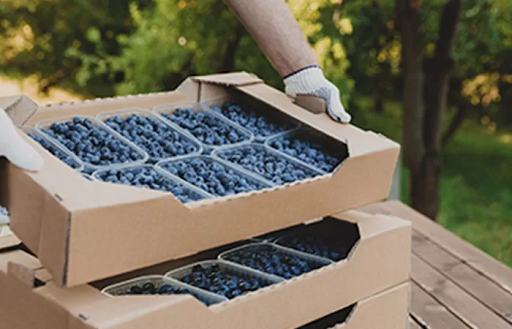
Berries are usually packed in small retail containers that must be grouped, carried, and stacked as a unit. The outer tray does much of this work.
A berry tray holds a set of smaller containers together as one unit. It needs to keep those containers level and limit sliding. Confirm how stacked trays support the load and whether the selected containers are intended to bear weight.
What a Berry Tray Needs to Get Right
- Dimensions: Confirm tray dimensions and stacking features against the selected containers and load requirements.
- Ventilation: Openings allow air to move around the containers during cooling and storage.
- Fit: Containers should sit snugly in a consistent pattern, with little room to shift in transit.
- Stacking alignment: Trays should stack in a stable column on a pallet, so weight travels through the walls and corners.
Different Berries, Different Requirements
Blueberries, strawberries, and other small fruit are packed in different container formats and quantities. A tray designed for one format may not suit another. Producers handling several berry types often benefit from a small family of tray designs instead of a single compromise size.
Timing matters here as much as design. Berry seasons are short. Plan packaging requirements and delivery schedules before seasonal demand increases.
Coleman Containers offers berry packaging, including berry trays and blueberry packaging designed for transportation, with ventilation built into the tray design.
Beverage Packaging for Bottles, Cans, and Cases
Beverage products are heavy, often fragile, and usually shipped in high volumes. That combination puts real demands on outer packaging.
Glass Bottles
Glass bottles can break during handling and transportation. Partitions separate bottles within the case. Confirm their suitability for the handling conditions. The case itself must also carry the weight of the bottles without bowing or tearing at the handholds and flaps.
Cans
Review can movement, denting risks, and case fit during packaging selection. Trays and wraparound cases sized to the can count and diameter are designed to hold the pack together through palletizing and transit.
Case Strength and Stacking
Beverage cases are often stacked high in warehouses and on trucks. Compression strength matters as much as the outer dimensions. Review case strength against the proposed pallet load, stacking arrangement, and storage conditions. Heavier loads may call for stronger board or triple wall bulk packs for internal transfers.
From Warehouse to Shelf
Many beverage brands also need packaging that goes onto the retail floor. Point of purchase displays, PDQ displays, and countertop displays are options to consider. Confirm how display packaging will be shipped, unpacked, and positioned in store. Planning shipping cases and display units together keeps the two consistent in size and count.
Coleman Containers provides beverage packaging solutions, including custom cardboard beverage packaging designed around the brand, product, and distribution route.
Pre Assembled Cartons and Hand Assembly Support
Packing lines in food and beverage operations often run on tight schedules. Time spent folding, taping, or assembling packaging is time not spent packing product.
Pre Assembled Cartons
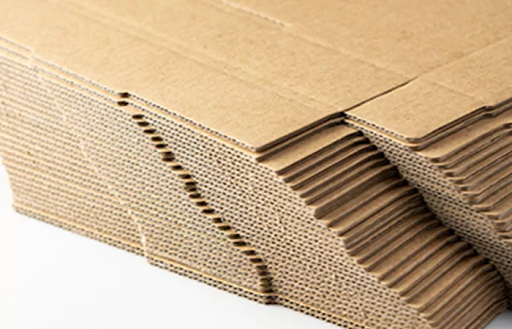
Pre assembled cartons are delivered assembled, so carton setup can move off the packing line. Confirm which assembly tasks are completed before delivery and which remain at the packing line. This can remove a manual step during high volume periods.
Pre assembled cartons are a practical fit when:
- Line labour is limited or stretched during peak seasons
- Carton assembly creates a bottleneck ahead of packing
- Consistency in carton shape matters for stacking and palletizing
- The operation does not have automated case erecting equipment
There is a trade off to consider. Pre assembled cartons take up more space than flat stock. Pairing them with scheduled deliveries helps avoid storing large volumes of assembled cartons on site.
Hand Assembly of Multi Part Packaging
Some outer packaging combines several components: a box, a pallet, corner posts, and a lid, for example. Coleman Containers has hand assembly capabilities for combining multiple substrates into a single packaging unit. Confirm the supplied assembly configuration and any preparation required before use.
Kitting
Kitting brings individual components together into one organized unit. For food and beverage businesses, this can support promotional packs, sample programs, and point of purchase display builds. Assembling these components before they reach the line can simplify handling and reduce the number of separate items staff must track.
Learn more about pre assembled cartons and kitting and assembly solutions.
Materials Used in Outer Packaging for Food and Beverage Products
The right material depends on what the packaging needs to do: carry weight, separate containers, protect edges, or cushion a fragile item. Select materials according to the role of each packaging component.
| Material | Typical role in outer packaging |
|---|---|
| Corrugated board | Shipping cases, trays, partitions, and pads for most packaged goods and produce |
| Triple wall corrugated | Bulk packs for heavier loads and larger volumes of processed and packaged goods |
| Fibre paper products | Supports and inserts that hold items in position |
| Honeycomb | Panels and supports selected for the application’s load and protection requirements |
| Edge board and chipboard | Corner and edge protection for pallets, plus layer sheets and light dividers |
| Foam inserts | Cushioning for fragile secondary items, such as glass in presentation packs |
Corrugated as the Foundation
Corrugated board is used for cases, trays, partitions, and pads. It can be cut, scored, and printed to suit a wide range of case, tray, and partition designs. Board grade and flute choice affect strength, stacking performance, and print quality, so they should be selected for the product and its storage conditions.
Honeycomb and Triple Wall for Heavy Loads
Assess honeycomb structures and triple wall bulk packs against the proposed load and handling requirements. These options can suit processed foods and bulk ingredients shipped in larger units.
Edge Board for Pallet Stability
Assess edge board for protection at pallet corners and strapping contact points. Confirm its suitability for the pallet configuration and strapping arrangement during the design stage.
Recyclability
Confirm recycling options for the selected material with the receiving recycling provider. Businesses with environmental goals can discuss material options during the design stage. More detail is available on Coleman Containers’ page on sustainable packaging in Canada.
A useful principle applies across all of these materials: the structure should match the product. Right sized packaging is a design decision, not simply a smaller box. The goal is enough protection for the product and its route, without material it does not need.
Inventory Management and Just in Time Delivery
Even well designed packaging creates problems if it is not available when the line needs it. Demand can rise quickly with harvests, promotions, and seasonal products.
The Cost of Running Out
A packaging shortage can interrupt packing. Perishable products cannot always wait for the next delivery. Emergency orders from whichever supplier has stock often mean accepting a box that does not fit. That brings back the damage and handling problems the custom design was meant to solve.
The Cost of Overstocking
The opposite problem is just as real. Large standing orders of flat stock fill warehouse space that should hold product. Packaging stored for long periods can also be damaged by handling or moisture before it is used.
Stock and Release
Coleman Containers offers a stock and release inventory management service. Discuss how forecasts, production schedules, and order information will inform agreed stock levels. Confirm storage arrangements, agreed stock levels, and release schedules with the supplier.
Just in Time Deliveries
Coleman Containers makes just in time deliveries with its own fleet of trucks. The company works with MRP and Kanban inventory systems and has extended production and delivery hours. It also keeps an inventory of various grades of stock sheets to support emergency rush order production.
For food and beverage operations, these capabilities work together:
- Forecasts align packaging supply with expected production and harvest timing
- Agreed inventory levels should be reviewed against demand forecasts and storage capacity
- Scheduled releases deliver packaging when the line needs it
- Rush capability helps when a promotion, new listing, or unexpected order changes the plan
Review forecasts, storage capacity, and release schedules before seasonal peaks and whenever operating requirements change.
Choosing an Outer Packaging Manufacturer in Canada
Food packaging companies in Canada range from distributors reselling stock items to manufacturers designing and producing packaging in house. The right partner depends on what the operation needs, but a few questions separate the options quickly.
Is the Supplier a Manufacturer or a Distributor?
A manufacturer can design and produce a custom case, tray, or partition to specification. Ask whether the supplier offers stock products, custom manufacturing, or both. For operations with specific container sizes or stacking requirements, manufacturing capability matters.
Does the Supplier Design in House?
Ask how the supplier manages design, sampling, testing, and revisions. A first design may need adjustment after testing on the line or in storage.
What Range of Materials Is Available?
Outer packaging often combines corrugated, fibre, honeycomb, and edge board in a single program. A supplier working across these materials can design the full system, rather than just the outer case.
Is the Packaging Scope Clear?
Confirm the cases, trays, partitions, and pallet protection included in the supplier’s scope. A clear scope helps procurement teams compare quotes on the same basis. It also shows which container dimensions, pallet patterns, and storage details need to be shared with the supplier during design.
Can the Supplier Support Inventory and Delivery?
Ask how forecasting, agreed inventory levels, and scheduled deliveries would support the operation. These services are especially relevant for seasonal and high volume producers.
How Does the Supplier Manage Quality?
Ask how the supplier maintains consistent production from order to order, and how it handles issues when they arise.
Does Location Matter?
For businesses comparing food packaging companies in Toronto, confirm delivery coverage, schedules, and arrangements for site visits or sample reviews. Coleman Containers is based in Etobicoke, Ontario, and supplies food packaging supplies to businesses across Canada.
A Practical Way to Start
A packaging review does not need to begin with a full redesign. A useful starting sequence is:
- Identify the products and containers with the most damage, rework, or packing time
- Review current cases, trays, and partitions against actual container dimensions and weights
- Map storage conditions, stacking heights, and transportation routes
- Request samples and test them on the line and in storage
- Plan the transition from current stock to the new specification
- Set up forecasting and scheduled releases for ongoing supply
Coleman Containers designs and manufactures custom packaging. From its Etobicoke facility, it produces corrugated, fibre, foam, honeycomb, edge board, and chipboard packaging. In house design, inventory management, and just in time delivery support each program.
Contact Coleman Containers to review current outer packaging and discuss cases, trays, partitions, or bulk packs built around the products and loads being shipped.
Frequently Asked Questions About Outer Packaging for Food and Beverage
Can Outer Packaging Be Customized to Specific Container Sizes?
Yes. Cases, trays, and partitions can be designed around the dimensions and weight of the specific bottles, jars, cans, or retail containers being shipped.
Are Pre Assembled Cartons Suitable for Food and Beverage Packing Lines?
Pre assembled cartons can suit lines where carton assembly slows packing or labour is limited. Confirm which assembly tasks are completed before delivery and which remain at the packing line.
How Can Producers Avoid Running Out of Packaging During Peak Season?
Agree on forecasts, stock levels, storage arrangements, and release schedules before seasonal demand increases.
Does Coleman Containers Serve Food and Beverage Businesses Outside Toronto?
Yes. Coleman Containers is based in Etobicoke, Ontario, and supplies custom packaging to businesses across Canada.