

Retail displays influence decisions before customers even handle products. Colour plays a quiet but decisive role in that first impression. When display packaging fails to align with brand intent or retail environments, products blend into the background. Missed attention often leads to reduced engagement and weaker in-store performance.
Choosing the right cardboard display boxes helps businesses shape perception, improve visibility, and support consistent retail presentation across locations.
Retail display packaging communicates brand cues instantly. White and black display formats each trigger different emotional and visual responses. These responses influence how buyers notice, interpret, and compare on shelves or counters.
Colour selection affects:
Understanding these effects helps businesses make intentional decisions about display packaging rather than relying on default choices.
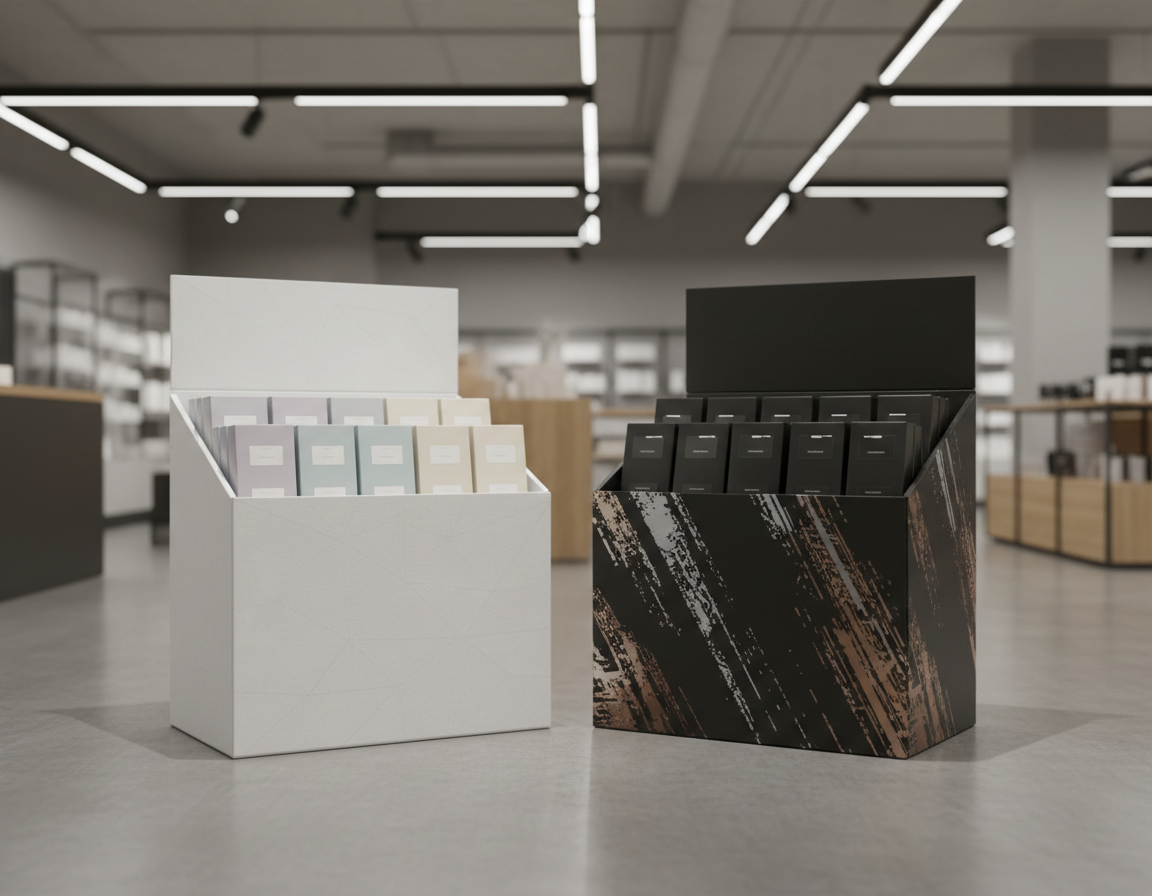
White cardboard display boxes are often used when clarity and openness matter. They provide a neutral background that supports readable graphics and product-focused messaging.
White display boxes work well when:
These boxes reflect light, helping displays appear brighter under standard retail lighting. This makes them effective for consumer goods and regulated industries where clarity supports trust.
Black custom cardboard floor display boxes communicate contrast and structure. They are commonly used when brands want to create visual separation or highlight premium positioning.
Black display boxes are effective when:
Darker surfaces absorb light, allowing graphics and finishes to stand out with greater depth when designed intentionally.
The difference between white and black cardboard floor display boxes is not aesthetic alone. Performance varies based on environment and purpose.
White display boxes
Black display boxes
Comparing the two options under real retail conditions helps align packaging with operational and visual goals.
Colour choice affects how printing and finishes perform on cardboard display boxes. White substrates provide consistent colour reproduction. Black substrates often require additional layers or specialty inks.
Key considerations include:
Material selection should account for handling frequency, display lifespan, and transportation requirements.
Retail spaces differ widely. Lighting, shelf layout, and surrounding brands all influence which display box colour performs better.
Colour choice should reflect:
A display box that performs well in one retail environment may underperform in another. Testing within real settings helps refine decisions.
The right cardboard display boxes support brand positioning without competing with product messaging. Colour decisions should reinforce brand identity and display intent.
A structured approach includes:
Strategic colour selection, supported by custom floor display manufacturers, strengthens recognition and supports long-term retail presentation.
Also Read:
How Custom Flip-Top Boxes Help Drive Faster Sales Growth
Design Principles That Elevate Cardboard Display Boxes on the Shelf
How Packaging Companies Are Tackling Produce Shelf Life Challenges
White and black cardboard display boxes each serve specific retail functions. The right choice depends on the environment, branding, and display goals, rather than on trends.
Businesses seeking custom cardboard display boxes that align with retail conditions and brand intent must choose the right floor display manufacturer. Contact Coleman Containers for tailored solutions to meet specific business needs.

Get Free Estimate!